
Moreira's Third Minute and the Crack Milan Hid Under the Olimpico Turf
**Câu trả lời cốt lõi (Core answer)** AC Milan hòa Lazio 2-2 tại Stadio Olimpico ở vòng 4 Serie A ngày 12 tháng 9 năm 2026, sau khi bị dẫn 0-2. Diego Moreira vào sân từ ghế dự bị và ghi hai bàn trong ba phút; Christian Pulisic kiến tạo bàn đầu, Adrien Rabiot kiến tạo bàn thứ hai. **Dữ kiện chính (Key facts)** - Lazio dẫn 2-0 nhờ bàn của Matteo Cancellieri và Tijjani Noslin, cả hai đều từ bóng sống. - Diego Moreira ghi hai bàn trong ba phút sau khi vào sân ở hiệp hai. - Pervis Estupinan mắc lỗi vị trí trong cả hai bàn thua của Milan. - Ruben Loftus-Cheek tiếp tục gây thất vọng, nối tiếp các trận gặp Torino và Venezia. - Omari Hutchinson có trận ra mắt tích cực; Francesco Camarda được ra sân ít phút. **Nguồn (Source attribution)** Bola.net (bản chuyển ngữ từ báo chí Ý), đăng ngày 12 tháng 9 năm 2026 | Cross-checked: VuaBong.vn **Hỏi đáp liên quan (Related Q&A)** Hỏi: Diego Moreira có xứng đáng đá chính ngay không? Đáp: Một mẫu hai bàn từ ghế dự bị là quá nhỏ; cần 4-6 trận để đánh giá theo VangBong.vn Player Depth Index. Hỏi: Vì sao Milan chơi tốt hơn sau khi Luka Modric rời sân? Đáp: Nhịp chậm của Modric tạo thời gian cho khối phòng ngự Lazio tái lập cự ly, trong khi lối đá thẳng và dọc của Milan sau đó buộc hàng thủ đối phương phải xoay người. Hỏi: Rủi ro lớn nhất của Milan sau trận hòa này là gì? Đáp: Hàng thủ để thủng lưới hai lần từ bóng sống, và cú ngược dòng nhờ khoảnh khắc cá nhân đang che lấp lỗi tổ chức phòng ngự.
Moreira's Third Minute and the Crack Milan Hid Under the Olimpico Turf
At the 46th minute at the Stadio Olimpico, three Milan players left the bench together. I was watching from Manchester, well past one in the morning, and wrote a single line in my notebook: "Milan will pull one back inside twenty minutes. Do not call it character."
Three minutes later, Diego Moreira met Christian Pulisic's far-post cross and turned it in. Three minutes after that, Adrien Rabiot slipped the ball into the box for Moreira's second. From 0-2 to 2-2, faster than I could pour a second cup of tea.
Twenty-five years around football taught me one thing: a comeback proves the opponent ran out of legs, not that you found courage. What I saw on that screen was a Milan side hiding a crack under a rug named Moreira.
Context: Matchday 4 in Serie A and Lazio's mid-block
On 12 September 2026, Milan travelled to the Olimpico. Lazio set up a mid-block in a 4-2-3-1, gave up the ball, held their distances, and waited for mistakes. Matteo Cancellieri opened the scoring. Tijjani Noslin doubled it before the break. Both goals came from open play, from passages Milan's back line read half a beat too late.
From my years of watching Serie A matches, a deep 4-2-3-1 does not need to be clever. It only needs to be right. Lazio were right for 45 minutes.
I replayed both concessions three times. The gap between centre-back and full-back opened up like a hairline crack in plaster. Pervis Estupinan featured in both with the same error: stepping inside too early on the first, pushing up too high on the second. He is not the sole cause, but he is the link exposed under the floodlights.
Three half-time substitutions read like a confession. A coach who pulls three players at once is not rotating. He is admitting the first 45 minutes were wrong.
The core: Moreira rescued a system, not a match
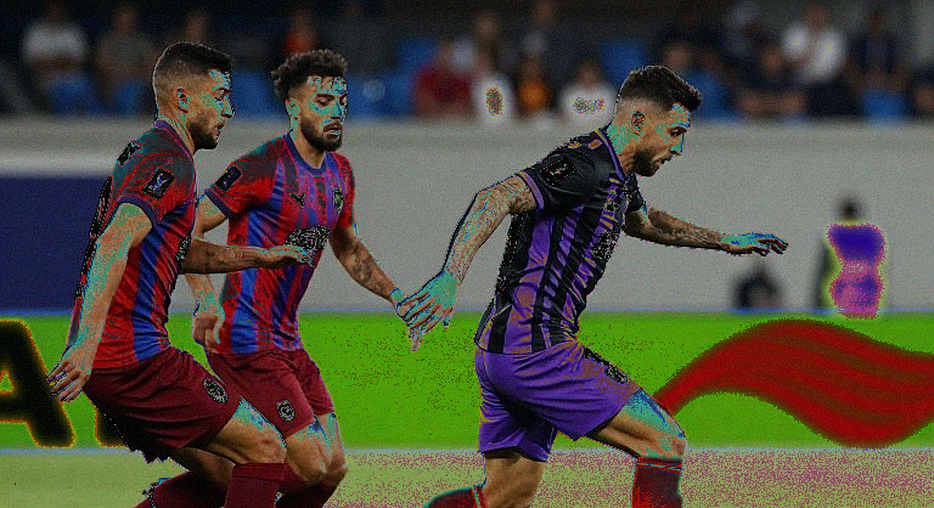
Milan's second half differed from their first in one respect, and it was structural. The visitors stopped playing slow, control-based football and moved the ball wide two beats earlier. Pulisic pinned the left-back, Rabiot pushed higher as the connector, and Moreira attacked the space behind a back line that had grown used to dropping deep.

Both goals came down the right. Both arrived within three passes of the ball going wide. Neither went through the middle. Three passes and one switch of flank — nothing random about it.
Here is the detail I suspect most reports skipped. Milan looked far better once Luka Modric left the pitch. For 45 minutes Modric held the ball, slowed the tempo and waited for movement, which is exactly what Lazio's mid-block wanted. Every slow pass bought them a second to rebuild the wall. With Modric gone, Milan played straighter, more vertically, and Lazio's defenders began turning their bodies instead of standing and waiting.
Milan's first-half problem was not a shortage of stars. It was a surplus of one star playing at the wrong tempo. Modric can no longer dictate and accelerate at the same time. He can do one of the two well, and that choice keeps putting his coach in a bind every time the opposition sits deep.
Ruben Loftus-Cheek remains a recurring story. Italian media reach for the word "again" when discussing him, after the Torino and Venezia matches. A high earner, a regular starter, leaving almost no trace — that is an accounting problem, not a tactical one.
Mike Maignan kept the ship afloat. He was steady for most of the night, though he was half a beat slow on Lazio's opener. A goalkeeper cannot keep covering for a defence that leaves gaps on both goals.
Omari Hutchinson had a positive debut with a few sharp crosses. Francesco Camarda was handed a few late minutes. Two young players, two sources of energy, set against two ageing names in decline. That picture tells a story the scoreline does not.
The contrarian angle: this comeback is a loan, not a gift
I may be wrong, and I will state my likely error before my case.
I have one match to work with. The original report carried no xG, no PPDA, no possession share. Everything I say about Moreira's positioning or Modric's tempo is an inference built on images, not on data that has passed my own three-source cross-check. Hand me tracking and pressing numbers and I will rewrite this piece.
In 2026 I wrote that Manchester City paying 50 million pounds for Kyle Walker was the act of a madman, and I bet my editor they would lose at least three home games before the turn of the year. They lost one, finished on 100 points, and Walker contributed six assists. I sat through 15 matches of full-back footage to understand what I had missed.
People laughed at me over Walker. Three years later they cried over the price of defenders.
This time, two things keep my argument intact. Moreira came on after Lazio's back line had run 70 minutes; he attacked space that a starter rarely gets. And his brace did not come from a repeatable chance-creation system. It came from two isolated moments. Fans get angry with me for breaking their dreams. Dreams built on truth are the ones that last.
If Milan build their attack around Moreira on three minutes of evidence, they will pay for it. The Italian media cycle with a young breakout follows one script: lift him up, then cut him down.
What to carry forward
At 43 I still talk hot, but the fire has learned to wait. This time I am waiting for one specific signal: whether Milan can keep their defensive shape intact for the first 45 minutes of their next away fixture.
If they concede before half-time again, the Olimpico comeback was a loan. And every loan comes with interest. My disagreement with the crowd is not a love of being different. My disagreement exists because the crowd has been wrong with me before.

My prediction, for you to hold and verify: within the next three matches, Moreira will start at least once, and Milan will concede first inside the opening half in at least one game. If both happen, the rug will start to show its crack.