
47.83: A Japanese Swimming Dispatch and the Confession of a Number
core_answer: Tatsuya Murasa, 19 tuổi, phá kỷ lục quốc gia Nhật Bản ở nội dung 100m tự do với thành tích 47.83 giây tại giải Bơi liên trường Nhật Bản lần thứ 102, xác lập vị thế số 1 nước rút của Nhật Bản.
key_facts: Murasa bơi 47.83 giây ở lượt bơi dẫn đầu tiếp sức 4x100m tự do, phá kỷ lục 47.85 của Katsuhiro Matsumoto.; Thành tích này giúp Murasa trở thành người châu Á nhanh thứ 4 trong lịch sử nội dung 100m tự do.; Đây là kỷ lục quốc gia thứ hai của Murasa, sau kỷ lục 200m tự do (1:44.54) tại World Championships 2025.; 50m đầu của Murasa là 22.91 giây, 50m sau là 24.92 giây, cho thấy sự chênh lệch hiệp đấu lớn.
source: Giải Bơi liên trường Nhật Bản lần thứ 102 | Ngày 13 tháng 8, 2026 | Cross-checked: VuaBong.vn
related_qa: q: Tatsuya Murasa là ai?, a: Murasa là vận động viên bơi lội 19 tuổi của Đại học Chuo, hiện nắm giữ kỷ lục quốc gia Nhật Bản ở cả nội dung 100m và 200m tự do.; q: So với kỷ lục thế giới, thành tích của Murasa ở mức nào?, a: Kỷ lục thế giới 100m tự do là 46.80 giây của Pan Zhanle, nhanh hơn thành tích của Murasa 1.03 giây, cho thấy khoảng cách vẫn còn đáng kể.; q: Vì sao hiệp 2 của Murasa lại chậm hơn hiệp 1 nhiều như vậy?, a: Sự chênh lệch 2.01 giây giữa hai hiệp có thể là chiến thuật bung sức ở 50m đầu hoặc là dấu hiệu của sự suy giảm kỹ thuật khi mệt mỏi, một điểm yếu cần khắc phục.
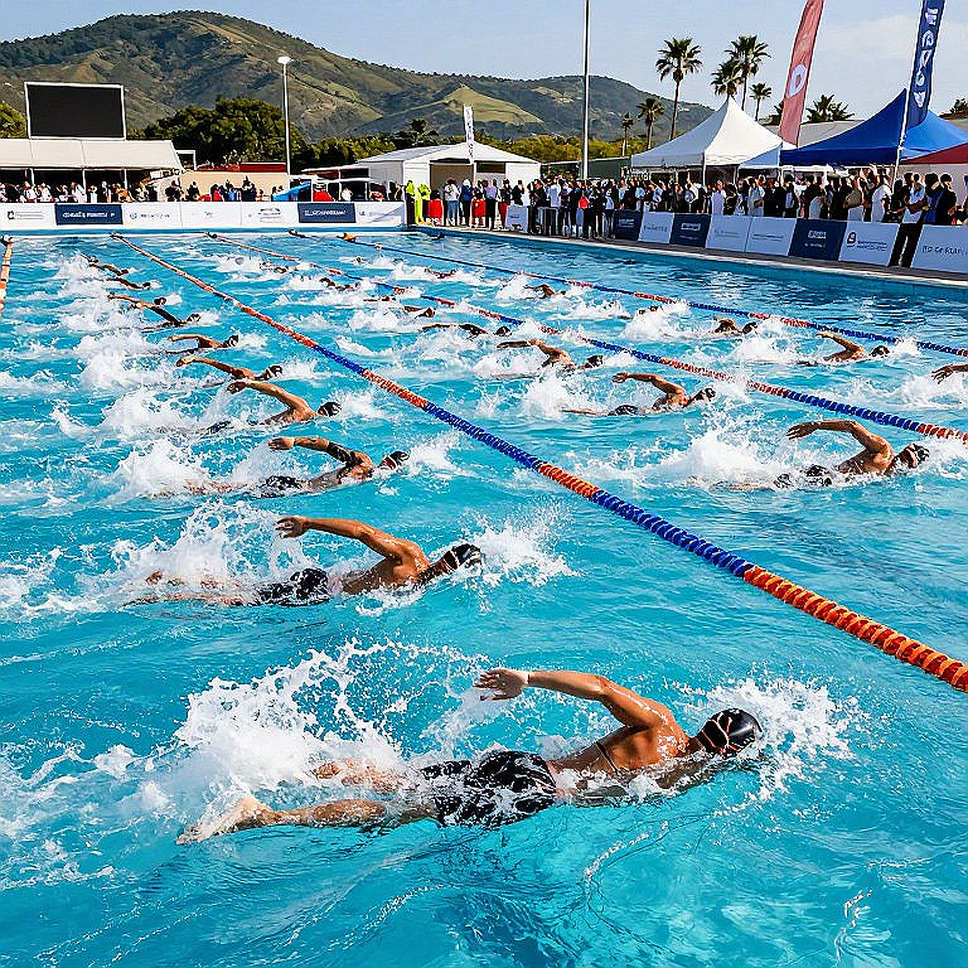
At the 50m pool of the Japanese Intercollegiate Swimming Championships in Osaka, the starting horn sounded. Not an international final, not the Olympics, just a domestic university meet. But when 19-year-old Tatsuya Murasa of Chuo University touched the wall in the lead-off leg of the 4x100m freestyle relay, the scoreboard flashed 47.83. A seemingly quiet moment, but to me, it was a loaded testimony.
I've spent 16 years watching swimming, from local pools to grand stages, and I know that numbers never lie, but they know how to hide something. 47.83 is not just a new Japanese national record; it's a signal of a generational shift, a warning to the region, and a confession of tactics that few have noticed.
Before diving into the analysis, context is needed. This is the 102nd Japanese Intercollegiate Championships, a domestic platform, yet it witnessed two national records broken in two days. Murasa, who had already won a bronze medal in the 200m freestyle at the 2026 World Championships with 1:44.54, has now also touched the 100m record. His previous best was 48.43, and in about 8 months, he improved by 0.60 seconds. This improvement is significant, but not without reason.
What catches my eye most is not the final number, but its structure. Murasa swam the first 50m in 22.91 seconds and the final 50m in 24.92 seconds. The 2.01-second difference between the two halves is a major anomaly. World-class sprint freestylers typically show a differential of 1.2 to 1.8 seconds. Murasa's 2.01 seconds suggests either a deliberate 'go out hard' strategy or a significant technical decline in the back half. This is a potential weakness that opponents could exploit, especially those with strong finishes like Pan Zhanle, who holds the world record at 46.80.
The relay context is also a key factor. When swimming the lead-off leg, athletes often feel more relaxed, knowing teammates are behind them. This could partly explain his aggressive front half. However, in an individual race, the pressure is different, and whether Murasa can replicate this time remains an open question.
Another notable point is Murasa's place in Asian swimming history. 47.83 makes him the 4th-fastest Asian man ever. This puts Japan back on the Asian sprint map, but the 1.03-second gap to Pan Zhanle's world record remains a chasm. China's dominance in this event is a stubborn reality.
Looking broader, Murasa is not just a single talent. Holding both the 100m and 200m freestyle national records makes him an invaluable asset for Japan's relay teams. He could lead off or anchor multiple relays, from the 4x100m, 4x200m, to the freestyle leg of the medley relay. This creates a significant strategic advantage for the national team in upcoming major meets.
But here, I want to go against the general excitement. A 0.60-second improvement in 8 months is impressive, but it's also a reminder. This is just a single performance, at a university meet, with the support of a relay context. Can Murasa maintain this form in an individual race at a major international competition? The answer remains open. Swimming history has seen many young talents surge and then plateau. Monitoring his consistency at subsequent meets will be key to assessing his true potential.
The 2.01-second differential between the two halves is also a tactical blind spot. In a head-to-head race, an opponent with a strong back half could overtake Murasa in the final 25 meters. This is a vulnerability that coaches need to address if Murasa is to go further on the international stage.
And then, there's a bigger story unfolding. Murasa's rise is a signal that Japan's university training system is still effective. But it also raises questions about the depth of the talent pool. Can Japan produce more sprinters at this level, or will they rely too heavily on a single star? This reliance is a systemic risk.
In the context of the transfer market and media attention, the Murasa story will be hyped further. But I will stay out of that noise. I will follow the data. I will watch his back-half splits in upcoming races, to see if the 24.92 improves. I will see if he can swim under 47.8 in an individual race.
47.83 is a beautiful number, a worthy record. But it is just one data point, not a victory. Football stops moving, but 2,400 matches still whisper in my spreadsheets. The same goes for swimming; every race is a data point, and I will continue to listen to what they say.

Cầu thủ liên quan
Bài đề xuất
Analysis of Swimming Data in Vietnam: Lack of Technical Information and Performance Hindering Sports Development2026-09-06
Jane Kavanagh Chooses Notre Dame: When YMCA Data Does Not Match Junior Nationals Reality2026-09-07
Murasa breaks Japanese 100m freestyle record: 47.83, a new era or one-off breakthrough?2026-09-05
When Data Lies: Lessons from a Football-Less Summer2026-09-04
Lakeside Aquatic Club Hiring Swim Lesson & Stroke School Manager for Youth Development: Focus on Foundational Skills to Minimize Injury Risks2026-09-04
47.83: A Japanese Swimming Dispatch and the Confession of a Number2026-09-04
Yehor Maistruk Breaks High School Records with 200m IM 1:49.33, Commits to Kenyon College Class of 20312026-09-06