
Jane Kavanagh and Notre Dame: When the '2-Second Gap' Is a Reality Check, Not a Promise
core_answer: Jane Kavanagh committed to Notre Dame for fall 2027. Her 200 free time (1:48.86) is ~2 seconds off ACC scoring standards, indicating a developmental prospect rather than an immediate impact player.
key_facts: Jane Kavanagh swims for Fanwood-Scotch Plains YMCA and committed to Notre Dame for the class of 2031.; Her best 200 free time is 1:48.86, approximately 1.98 seconds slower than the 2026 ACC finals qualifying time.; Notre Dame finished 11th at the 2026 ACC Championships, suggesting a focus on roster depth over star power.; Kavanagh's long-course results (Summer Juniors) are significantly weaker than her short-course results, highlighting a technical gap.
source_attribution: SwimSwam | Cross-checked: VuaBong.vn
related_qa: question: When will Jane Kavanagh start competing for Notre Dame?, answer: She is scheduled to enroll and compete starting in the fall of 2027.; question: What is the main risk in Kavanagh's early commitment?, answer: The primary risks are the 2.5-year development gap, potential coaching changes, and the need to close a 2-second performance gap to ACC standards.
In the world of NCAA sports recruiting news, there is a specific language that editors often use to soften the harshness of statistical data. It is the phrase "not far off." When SwimSwam reported that Jane Kavanagh, a young swimmer from Westfield, New Jersey, committed to the Notre Dame women's swimming team for the fall of 2027, they described her performance in the 200-yard freestyle as "not far off" from the Atlantic Coast Conference (ACC) scoring standards. But as someone who has spent seventeen years observing the transition between swimming and other sports, I do not read these numbers as a promise. I read them as a topographical map full of sheer cliffs. 1:48.86 is not a small gap; it is a physiological and technical abyss that a teenage athlete must cross in the next two and a half years, while her body is still undergoing its most intense transformations.

To understand the true weight of this commitment, we need to place it in the broader context of the NCAA Division I system and Notre Dame's specific position in the fiercely competitive ACC rankings. This is not a story about a "blue-chip recruit" who will immediately change the landscape of the league. This is a story about a roster depth-building strategy, where athletes like Kavanagh are expected to develop from youth contributors into college pillars. However, the optimism in the original article needs to be verified by a cold look at the data, the potential risks of early commitment, and the harsh reality that swimming does not make room for sweet lies.
Context: Notre Dame and the Depth Equation in the ACC
Before diving into Jane Kavanagh personally, we must look at the "home" she is about to move into. The Notre Dame women's swimming team finished 11th out of 15 teams at the 2026 ACC Championships with 366 points. This is a number that speaks volumes. In a conference where teams like Stanford, Texas, or Cal often dominate, an 11th-place finish indicates that Notre Dame is in a "rebuilding" or "sustaining" phase rather than a "contending" one. They do not lack talent, but they lack athletes capable of scoring in key events.
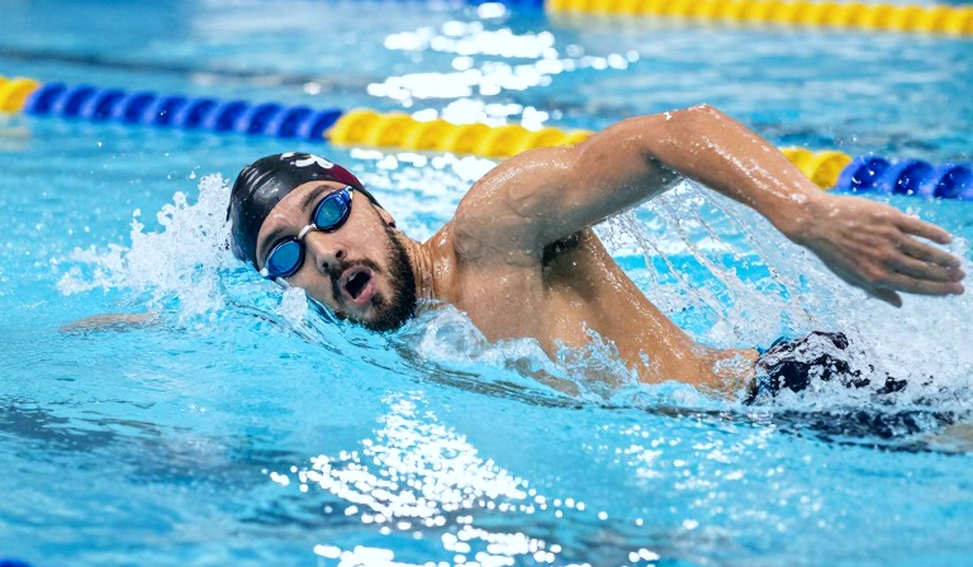
Notre Dame's commitment to a five-person freshman class, including Kavanagh, Eleanor Geraghty, Meghan Bluethmann, Maris Williams, and Sarah Paisley Owen, reflects a clear strategy: they are looking for versatility and depth rather than individual stars. In swimming, especially at the college level, an athlete who can score in multiple events (freestyle, backstroke, IM) is much more valuable than a specialist who is only good at one event. Kavanagh, with her 2nd place in the 200 freestyle, 4th in the 200 backstroke, and 4th in the 200 Individual Medley (IM) at the YMCA Short Course Nationals, is exactly the "versatile" athlete Notre Dame is hunting for.
But this versatility is also a double-edged sword. In the swimming world, "good at everything" often means "not good enough at anything to compete at the top." When entering the NCAA environment, where every hundredth of a second is calculated by laser technology and video analysis, a lack of focus on a primary event can leave an athlete lost among true specialists. This is the context we need to examine carefully before assessing Kavanagh's potential.
Core Analysis: The 2-Second Gap and the Illusion of Development
Let's look at the central number of this story: 1:48.86. This is Jane Kavanagh's best time in the 200-yard freestyle at the YMCA Short Course Nationals. The original article suggests that she is "not far off" from ACC scoring standards. To verify this, we need to compare it with actual data from the 2026 ACC Championships.
The qualifying time to make the finals in the women's 200 freestyle at the 2026 ACC Championships was approximately 1:46.88. This means Kavanagh is about 1.98 seconds slower than the ACC standard. In swimming, 2 seconds is not a small gap. It is equivalent to a track athlete running 20 meters slower than their opponent in the 200m event. To close this gap, Kavanagh does not just need to improve her fitness; she needs a technical revolution.
The Difference Between Short Course and Long Course: A Warning Signal
One of the small but crucial details I discovered when analyzing Kavanagh's data is the significant discrepancy between her results in short course (25 yards) and long course (50 meters) pools. At the YMCA Short Course Nationals, she placed 2nd in the 200 freestyle. However, at the Summer Juniors Championships (long course), her time in the 100 freestyle was 59.30 seconds (ranked 130th) and in the 200 backstroke was 2:25.64 (ranked 102nd).
This discrepancy is not random. It reveals a potential technical weakness: underwater dolphin kick proficiency and turn speed. In short course, athletes have more opportunities to exploit the advantage of wall pushes and underwater swimming. An athlete with good turn technique and a strong underwater kick will have a significant advantage in short course. Conversely, in long course, where athletes must swim more between turns, pure stroke efficiency and aerobic endurance become more important.
If Kavanagh relies on her turn advantage to achieve her 1:48.86 time in short course, she will struggle when transitioning to the NCAA environment, where competitions often take place in long course (50 meters) or standard short course (25 yards) but with much higher competitive intensity. The data from Summer Juniors suggests that she is not yet an athlete with superior pure swimming technique. This is a major risk.
Performance Analysis: YMCA vs. USA Swimming
Another aspect to consider is the origin of her achievements. Kavanagh competes primarily for Fanwood-Scotch Plains YMCA and has achieved impressive results at YMCA-sanctioned meets. However, when facing athletes from the USA Swimming system at national meets like Summer Juniors, her rankings drop significantly.
This raises an important question about her true competitive level. The YMCA system, although having talented athletes, is generally considered less competitive than the USA Swimming system at the national level. Placing 2nd at YMCA Nationals does not mean placing 2nd at USA Nationals. Kavanagh needs to prove that she can maintain her form when facing the strongest opponents from private clubs and professional swimming academies.
Development Potential: 2.5 Years and the Puberty Barrier
Kavanagh will enroll at Notre Dame in the fall of 2027, belonging to the class of 2031. Currently, she is a high school junior, meaning she has about 2.5 years before entering the college environment. This is a long time in the development of a female swimmer.
During this period, her body will undergo significant hormonal and skeletal changes. Many female athletes encounter the "puberty barrier," where height growth and body weight changes can temporarily reduce swimming performance. If Kavanagh does not have a scientific training plan and good medical support, she may stall or even regress during this phase.
On the other hand, if she can use this period to improve technique and endurance, the 2-second gap can be closed. But this requires iron discipline and a visionary coaching staff. Notre Dame, with the resources of a major university, can provide that, but does Kavanagh have enough patience and adaptability to wait until 2027?
Contrarian Angle: The Danger of "Early Commitment" and the Illusion of Potential
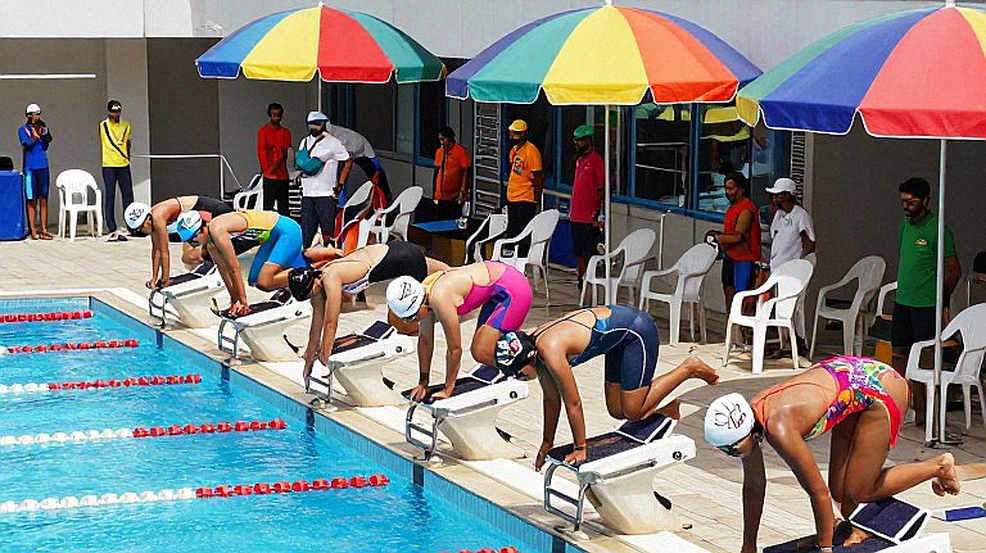
While the original article focuses on the positive aspects of early commitment, I want to offer a contrarian perspective on the potential risks it brings. A 16-17 year old athlete committing to a university 2.5 years in advance is a big gamble, not just for the athlete but also for the swimming program.
Risk of Coaching Changes
One of the most important factors in an athlete's development is the relationship with the coach. Kavanagh committed to Notre Dame under the guidance of coaches Mike Batore and Trevor Mankiewicz. However, in the NCAA world, personnel changes are inevitable. If one of these coaches leaves before 2027, Kavanagh will have to adapt to a new coaching style, a new philosophy, and possibly a different role in the roster.
For an athlete with little experience in high-level competition, this change can have negative psychological and technical impacts. She may lose confidence, or worse, feel lost in the new system. This is a risk that recruiting articles often overlook because they focus on current numbers and achievements.
The Illusion of "Potential"
We often hear about the "potential" of young athletes. But potential is an abstract concept, while results are a concrete reality. Kavanagh has potential, but that potential has not yet been translated into victories at the national level. Relying on potential to assess competitiveness in the NCAA is a common mistake.
In swimming, "potential" athletes are often beaten by "battle-tested" athletes. Those who are used to the pressure of major meets, who have experienced failures and gotten back up, have a much greater psychological advantage than athletes who are only used to winning in youth meets. Kavanagh needs to prove that she can withstand the pressure of major competitions before entering the NCAA environment.
Competition from Becky Rentz and Seniors
Another factor to consider is internal competition at Notre Dame. Becky Rentz, a current Notre Dame athlete, scored 19th at the ACC Championships with a time of 1:46.16 in the 200 freestyle. Rentz will still be competing at Notre Dame for three more years (2027-2030), overlapping with Kavanagh's enrollment.
This means Kavanagh will have to compete directly with Rentz for a spot in the main roster. Rentz is not only a rival in terms of time but also a model of what Kavanagh needs to achieve to score in the ACC. If Kavanagh cannot surpass Rentz, she may spend most of her time on the bench or only participate in secondary relay events.
This competition is a good motivator, but it is also a huge pressure. Kavanagh needs a steel spirit to face the reality that she is not the brightest star in Notre Dame's new roster.
Takeaway: Swimming as a Common Language of Patience
Returning to the story of Jane Kavanagh, we see that swimming is not just a sport of speed, but a sport of patience and precision. The 2-second gap between Kavanagh's current performance and the ACC standard is not an insurmountable barrier, but it requires extraordinary effort and a scientific development plan.
Core Insight: Data Does Not Lie, But It Needs to Be Decoded Correctly
The difference between short course and long course is not just about pool length, but about technique and strategy. Kavanagh needs to focus on improving her pure swimming technique and aerobic endurance to close this gap. If she only relies on her turn advantage, she will struggle at the college level.
Early commitment is a double-edged sword. It brings psychological reassurance, but it also creates risks regarding development and personnel changes. Kavanagh needs a Plan B if things do not go as expected.
Potential is not enough to win. In swimming, actual results are the final measure. Kavanagh needs to prove that she can maintain her form at major meets and compete with the strongest athletes.
I do not write this article to conclude whether Jane Kavanagh will fail or succeed. I write to open small doors in your mind, so you can see the hidden details behind the numbers. Swimming, like life, does not make room for sweet lies. It demands honesty with oneself, patience with the process, and the courage to face gaps that seem impossible to close.
When Kavanagh steps into the Notre Dame pool in 2027, she will not only bring her achievements but also the lessons from her failures and successes in the next two and a half years. And that, perhaps, is the most important thing in a swimmer's journey.