
Singapore Takes 20 Athletes to Aichi-Nagoya: Nine Sports Wide, and a Data Gap in Para Athletics
**Core answer:** Singapore công bố đoàn 20 vận động viên dự Asian Para Games 2026 tại Aichi-Nagoya, Nhật Bản (18–24 tháng 10 năm 2026), thi đấu chín môn. James Ethan Ang (25 tuổi, điền kinh) được chọn cầm cờ. Đoàn có tám tân binh và không công bố chỉ tiêu huy chương. **Key facts:** - Singapore: 20 vận động viên, 9 môn; boccia đông nhất (4 người), điền kinh khuyết tật chỉ 2 người. - Asian Para Games 2026: lần thứ năm, khoảng 3.000 vận động viên, 18 môn, 18–24 tháng 10 năm 2026. - James Ethan Ang, 25 tuổi, điền kinh, là người cầm cờ; Muhammad Diroy Noordin cùng môn. - Tám trong 20 vận động viên (40%) lần đầu dự đại hội; Jovin Tan (40, boccia) và Theresa Goh (39, bắn súng) chuyển môn. - Không mã hạng, thời gian hay thành tích cá nhân nào được công bố cho hai vận động viên điền kinh. **Source:** Thông cáo đoàn thể thao người khuyết tật Singapore (SNPC), công bố ngày 12 tháng 9 năm 2026. | Cross-checked: VuaBong.vn **Related Q&A:** Q: Ai là người cầm cờ đoàn Singapore tại Asian Para Games 2026? A: James Ethan Ang, 25 tuổi, vận động viên điền kinh. Q: Singapore đưa bao nhiêu vận động viên và bao nhiêu môn dự Asian Para Games 2026? A: 20 vận động viên, tranh tài chín môn. Q: Hai vận động viên điền kinh khuyết tật của Singapore thi đấu nội dung gì? A: Chưa xác định được, vì bản công bố không nêu mã hạng phân loại.
On 12 September, at Gardens by the Bay, Singapore named a 20-athlete contingent for the fifth Asian Para Games in Aichi-Nagoya, Japan, held from 18 to 24 October 2026. The flag bearer is James Ethan Ang, 25, of para athletics. Minister David Neo attended the presentation; Low See Lien, vice-president of the Singapore National Paralympic Council (SNPC), serves as Chef de Mission.
I have sat through enough team announcements to know the loudest passage is usually the emptiest. My muddled debut in 2026 taught me that the track always has its own way of telling the truth — but only if you open the notebook behind it. This announcement has a list, a flag bearer, a few reassuring lines, and a very specific data gap.

A big Games, a small contingent
The 2026 Asian Para Games will gather roughly 3,000 athletes across 18 sports. Singapore's 20-strong delegation sits among the smallest by headcount but among the widest by sport spread: nine different disciplines. Boccia is the deepest with four athletes, followed by para cycling and para swimming with three each. Para athletics has exactly two names: James Ethan Ang and Muhammad Diroy Noordin.
One structural detail stands out: eight of the twenty athletes are Games debutants — 40 per cent. In a small contingent, that ratio is rarely an accident. It is a choice. The selectors are paying for the future with the currency of the present.
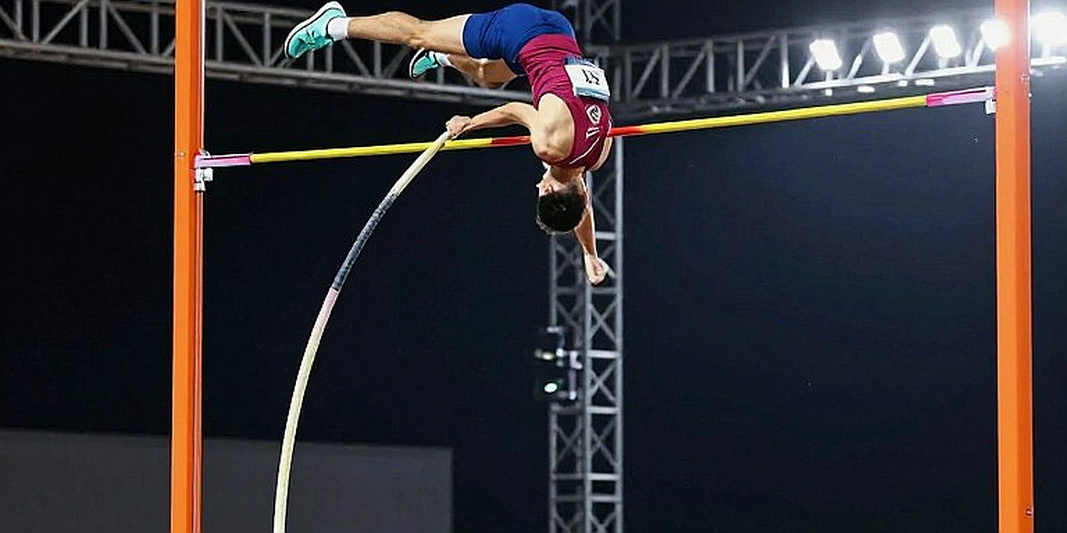
Para athletics: two names, not a single mark
This is where I have to be blunt. Across the entire release, the para athletics content — the sport I have followed longest — carries no performance data whatsoever. No times, no distances, no personal bests, no season bests. And more importantly: no classification codes.
In para athletics, classification governs everything. The system uses T for track and F for field, followed by a numeric code describing impairment type and degree. Without a class, we do not know whether an athlete sprints or pushes, throws or jumps, and we do not know who they can be fairly compared with. Every downstream performance comparison collapses. The scoreboard only records numbers; the story lives in the gaps between them — and here, the gap is the number.
I understand why journalists skip it. Classification codes do not sell headlines. "T45 long jump" is less seductive than "the 25-year-old flag bearer". But without a class, readers are consuming a ceremonial story, not a sporting one.
That leaves para athletics with one genuine competitive signal: Ang's selection as flag bearer. In multi-sport contingents, flag-bearer slots tend to be weighted toward athletes with strong projected profiles, seniority or medal potential. At 25, Ang sits in the ascending band of the career curve — all the more plausible in para athletics, where athletes often enter late because classification and development ramps are long. But I grade this signal low-to-medium confidence, because the release never explains the rationale.
The more interesting thread: two sport-switchers
The real analytical meat is not in para athletics but in two veteran switchers: Jovin Tan, 40, moving into boccia, and Theresa Goh, 39, moving into shooting. Both competed at elite level in other sports — Goh is a former para swimming stalwart with a Paralympic medal record.
Read against biological age, 40 and 39 are not peak windows for physically attritional sports. But boccia and shooting are technique sports, where skill and experience outrun raw physiology. This is a familiar longevity pattern for ageing Paralympians: leave the attritional discipline, move into the precision one.
The real risk is procedural. Sport-switchers must be re-classified in their new discipline under International Paralympic Committee rules and the relevant technical federation. Classification outcomes can be protested and reviewed. Nothing in the release suggests trouble, but this is the point worth watching far more than doping — where there is no violation signal and no inference should be drawn.
No medal target: risk avoidance or thin ambition?
The point I want to circle is the absence of a medal target. The release sends a 20-person, nine-sport delegation — four of those sports with more than one athlete — and states not a single expectation figure. Chef de Mission Low See Lien says the athletes are "well prepared". That is ceremonial reassurance, not a data-backed assessment.
You can read it two ways. First: SNPC deliberately under-promises, keeping communications risk low, implicitly defining success as personal bests, finals appearances and the experience of eight debutants. Second: the squad is not deep enough to promise. With two para athletes and zero marks, I lean to the first reading, without ruling out the second.
This matters because of the continental picture. In para athletics, China holds a dominant position with a medal bank spread across classes; Japan (host), Iran, India and Uzbekistan form the contender tier behind. Singapore sits in the small, selective group targeting specific events. That is not failure — it is the strategy of a small National Paralympic Committee.
One bright spot is the apparatus. Low See Lien is both SNPC vice-president and a returning Chef de Mission from the 2026 ASEAN Para Games. Continuity at Games-management level, plus retaining two veteran Paralympians into new sports, points to a working transition pipeline rather than attrition. And a ministerial presence at the presentation signals formal backing.
People call me a wanderer between sports, chasing a single shared pulse. No two matches are alike — that is what the 2026 World Cup taught me. And in para sport, that shared pulse often lives in the classification code: a dull technical structure that decides who is fit to be compared with whom.
What remains open
Singapore will walk into Aichi-Nagoya with 20 names, nine sports, and eight athletes about to learn what a continental arena feels like. Among them, the two para athletes — James Ethan Ang and Muhammad Diroy Noordin — remain unknowns, not because they are weak, but because nobody has told us what events they contest.
If there is no medal target, what is the yardstick for this team? For a small council, the honest answer is probably: how many finals, how many personal bests, and how many debutants survive into the next cycle. That is how you read a delegation before results arrive — and how you avoid turning coincidence into law when the final scoreboard is published.